
The Yellow Carpet
The latest from Hollywood on the Potomac.
Written by contributor Tamara Buchwald
Photo credits: Getty Images for National Geographic
The wait is over! After four years of ambitious renovations, the National Geographic Museum of Exploration has made its highly anticipated return, unveiling a reimagined destination dedicated to discovery, storytelling, and adventure. Judging by the excitement surrounding the exclusive preview and ribbon-cutting ceremony, it was well worth the wait.

Sophie Darlington, Wildlife Cinematographer
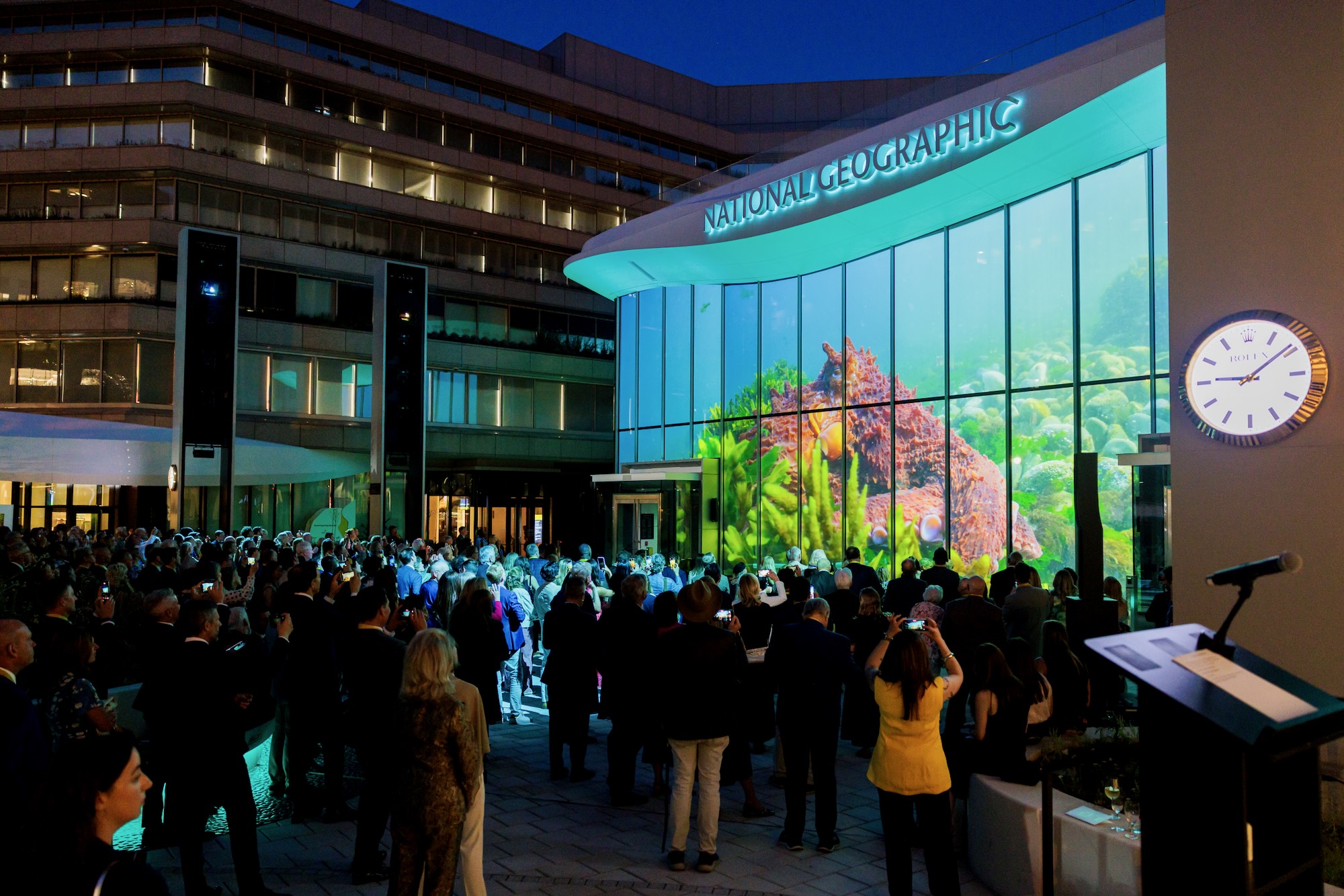
The festivities began with a walk down the yellow carpet by explorers, documentary filmmakers, photographers, and special guests. The vibrant pathway paid tribute to the magazine’s timeless and iconic yellow border, serving as both a symbolic and literal entrance into a world of exploration and discovery.

Guests were welcomed by the electrifying energy of the acclaimed dance company Step Afrika!, whose flawless performance set an enthusiastic tone for the celebration. The event then moved to the pavilion for the official ribbon-cutting ceremony, where attendees were greeted by stunning footage of African elephants roaming across the Sahara. The imagery was beautifully complemented by a special performance from the United States Marine Corps Band, whose rendition of King Cotton provided a fitting soundtrack to the majestic scene unfolding on screen.

Kevin J. Maroni
The grand opening ceremony began with welcoming remarks from Kevin J. Maroni, Chair of the National Geographic Society’s Board of Trustees. Maroni reflected on the institution’s enduring commitment to exploration, education, and storytelling, emphasizing the museum’s role in inspiring future generations to better understand and protect the world around them.

National Geographic Society CEO Jill Tiefenthaler followed with remarks describing the Museum of Exploration as a place where visitors can experience the wonder of discovery through immersive exhibits, cutting-edge technology, and the stories of National Geographic Explorers from around the globe. She noted that the museum was intentionally designed to spark curiosity and encourage visitors to become explorers in their own lives.

The celebration reached its centerpiece with the official ribbon-cutting ceremony led by board members, executives, explorers, and special guests. As the ribbon fell, enthusiastic applause erupted from attendees gathered to witness the opening of the Society’s newest public attraction.

Spanning more than 100,000 square feet, the new National Geographic Museum of Exploration features immersive exhibitions, educational experiences, a state-of-the-art theater, and an extensive collection of artifacts, maps, and archival materials drawn from more than a century of exploration. Designed to bring science, conservation, history, and adventure to life, the museum represents a major investment in the National Geographic Society’s mission to illuminate and protect the wonder of our world while inspiring lifelong curiosity.

Among the museum’s signature experiences are Photo Ark: Animals of Earth, showcasing endangered and threatened species through breathtaking photography, and Rolex Explorers Landing, which follows real-world expeditions from the depths of the ocean to the far reaches of outer space.

James Cameron
Visitors also enjoyed a series of special programs throughout the opening celebration, including a fireside chat featuring renowned oceanographer and explorer Sylvia Earle; photographer and conservationist Ami Vitale; storytellers Noel Kok and Pragna Parsotam-Kok; and an Explorer Talk with legendary filmmaker James Cameron.

The museum’s ultimate goal is to make visitors feel as though they are joining National Geographic explorers in the field—whether diving beneath the ocean’s surface, trekking through remote rainforests, or venturing into space—rather than simply viewing exhibits from behind glass.
As I walked through the museum, I couldn’t help but reflect on the remarkable history of the National Geographic Society itself. Established in Washington, D.C., on January 13, 1888, by a group of 33 prominent scholars, explorers, and scientists—including Alexander Graham Bell—the Society was founded with a mission dedicated to “the increase and diffusion of geographical knowledge.”
More than 138 years later, that mission remains as relevant as ever. It is remarkable to consider how visionary those founders were for their time, and equally inspiring to see how their legacy continues to evolve. How far we have come—and how far there is still to go.

The National Geographic Museum of Exploration opens to the public on June 26.