
What's in a Name?
The latest from Hollywood on the Potomac.
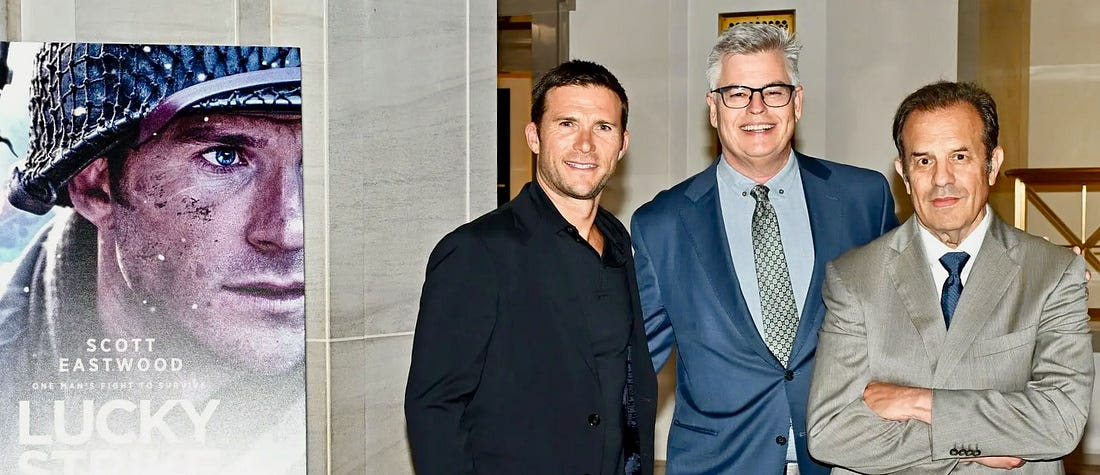
Quite a lot, as it turns out.
At first glance, Lucky Strike sounds like a nostalgic nod to the iconic cigarette brand that defined a generation. But at the Washington, D.C. premiere of Lucky Strike at the National Archives Museum surrounded by the film’s cast and crew, producer Jonathan Yunger revealed that the title carries a far more intriguing—and dangerous—meaning.
“It does,” he said when asked whether the title really referred to the cigarettes. “It’s all connected.”
He then pulled a weathered pack of Lucky Strikes from his pocket—his own prop from the film, signed by the cast. “This pack was mine from the movie,” he said. “It’s signed by everybody.”
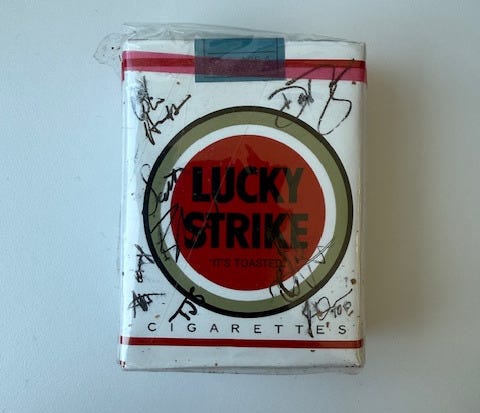
Photo credit: Jonathan Yunger
The story behind it is pure wartime intrigue.
“Every GI got two cartons of Lucky Strikes in their rations,” he told Hollywood on the Potomac. “In basic training, the American GIs had it beaten into their heads that when they go to smoke a cigarette, a Lucky, they should flip it around and burn the logo first so that when you throw the cigarette butt on the ground, you leave no trace. And if you didn’t smoke a cigarette like that, chances are you might’ve been a spy.”
The detail wasn’t about smoking. It was about survival, deception and identity during the chaos of The Battle of the Bulge, where German operatives disguised as American soldiers lurked behind allied lines.
When I suggested I thought the title referred to survival, he smiled. “Well, there’s a double entendre there too,” he said. “But Lucky Strikes are all over this movie.”
It’s the kind of detail that transforms an ordinary cigarette into a storytelling device—and a title that lingers long after the credits roll.
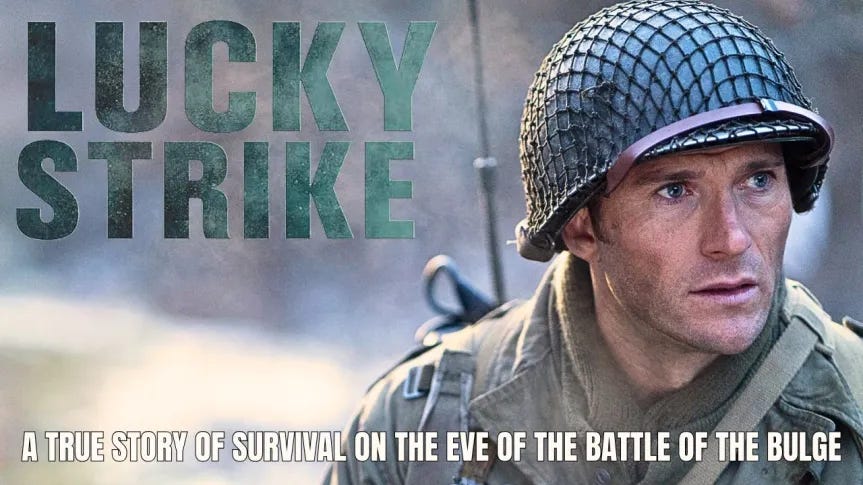
“Lucky Strike” tells the story of a wounded American soldier who fights to survive behind enemy lines at The Battle of the Bulge during World War II, relying on his instinct, spy craft and a hand-radio to evade capture and find his way back to his unit.
Following the screening, there was an audience Q & A with film director Rod Lurie, co-writer/producer Marc Frydman, producer Jonathan Yunger and actor Scott Eastwood. The film was presented by National Archives Foundation in partnership with Roadside Attractions and Saban Films.
Yunger also spoke about what drew him to the project in the first place. “I like to tell the parts about heroes,” he said. “I look at them as hero stories.” While Lucky Strike is set against one of World War II’s bloodiest battles, he believes its heart lies not in combat but in the courage of ordinary people.
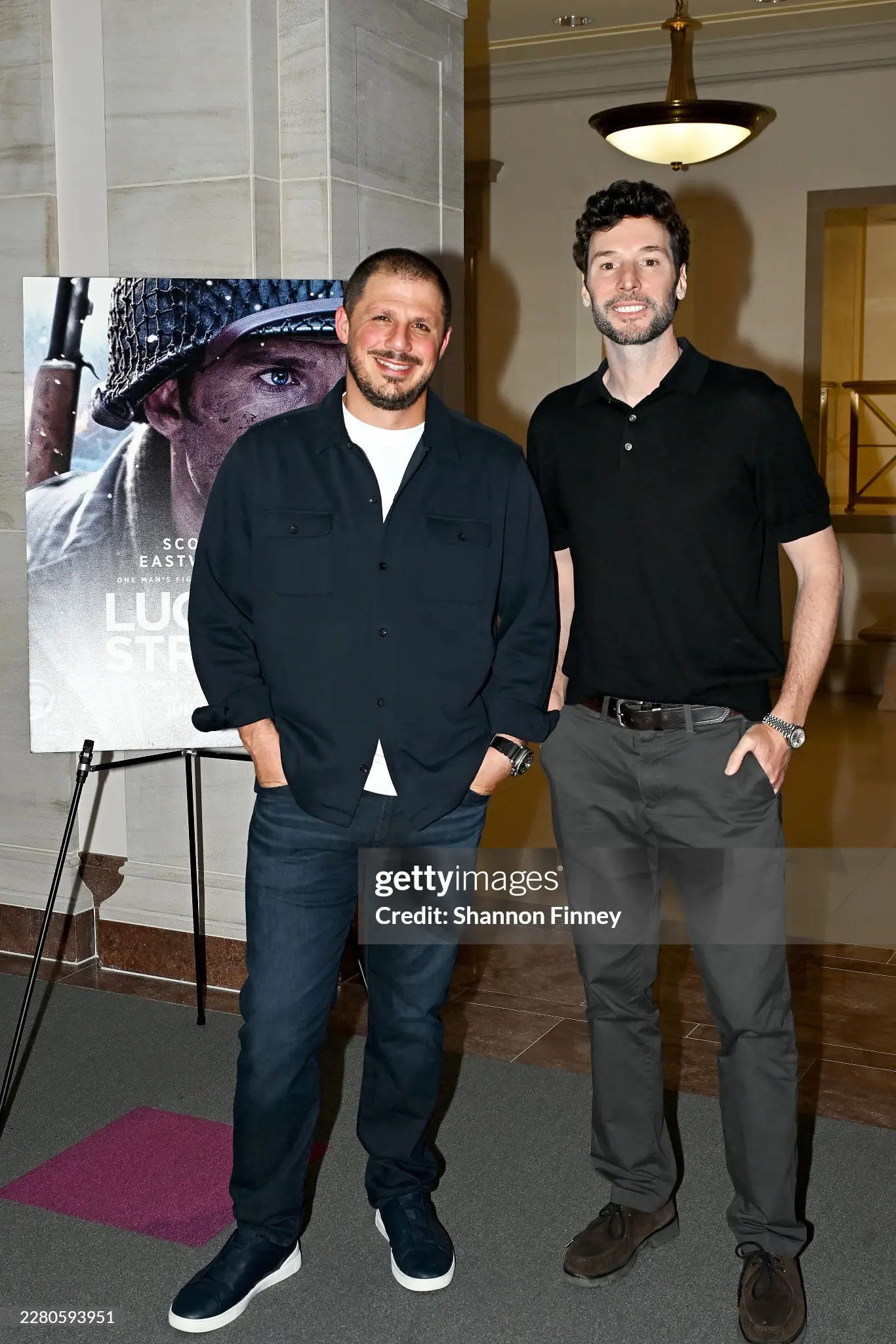
Jonathan Yunger and Jonathan Saba, President of Saban Films
For him, the story is also a tribute to those who fought. “It really was the greatest generation,” he reflected.
In the end, Lucky Strike is about much more than a famous cigarette. It’s about duty, sacrifice, quiet heroism and the tiny details that could mean the difference between life and death. By the time the credits roll, audiences will understand that the title is as layered as the story itself.
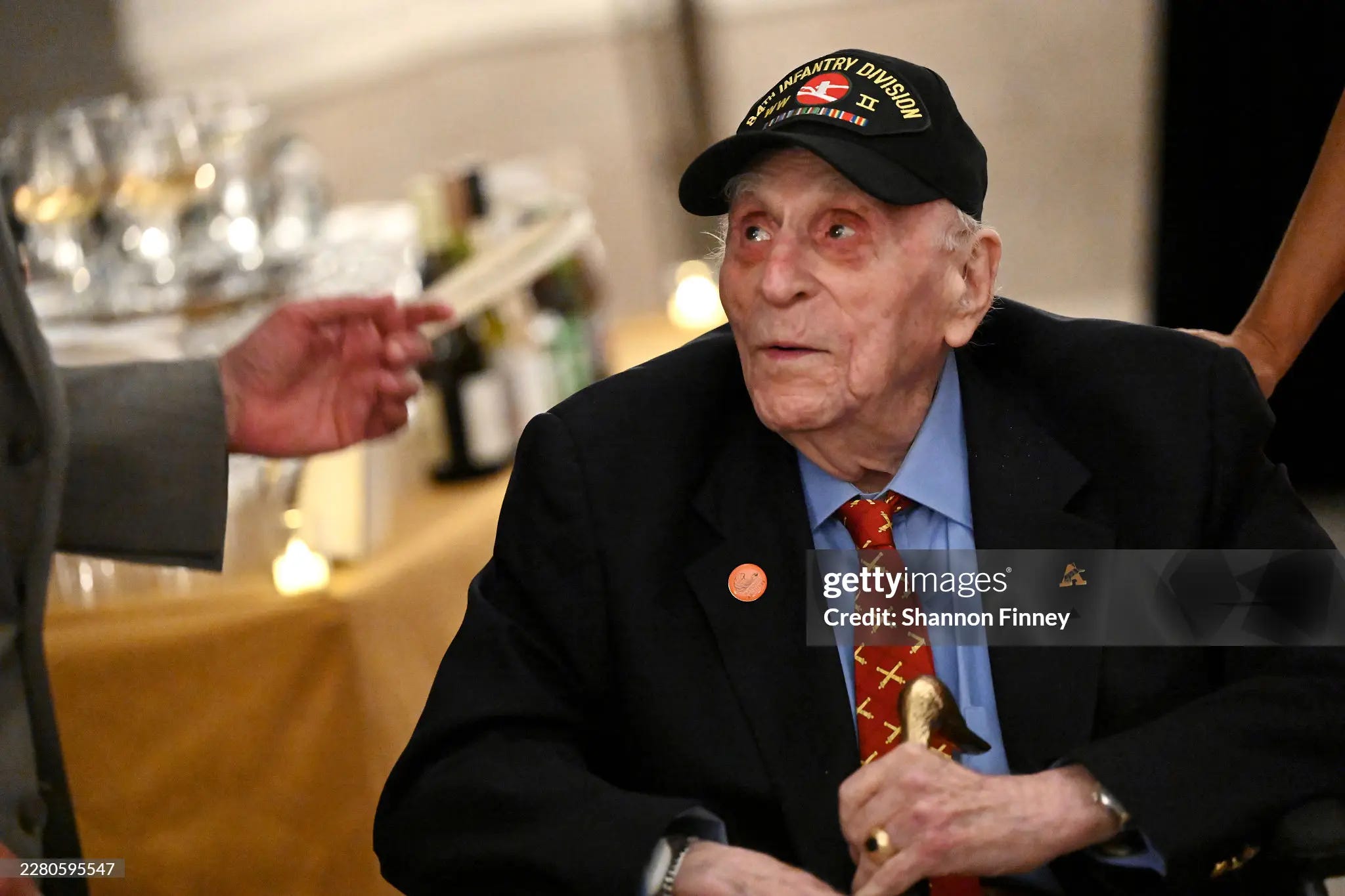
Battle of The Bulge veteran Colonel Herbert Stern
For co-writer and producer Marc Frydman, Lucky Strike isn’t simply another World War II movie. It’s a story about heroism that extends well beyond the battlefield.
“This is a story that was told to me when I was 16 years old growing up in France interviewing GIs that would come over to Normandy,” he said. “I interviewed about a hundred of them for my high school, and this one story just stuck out to me. That’s what ended up becoming Lucky Strike.”
While audiences know The Battle of the Bulge as one of history’s defining military conflicts, Frydman was equally drawn to what happened after the war—and to the quiet acts of decency that history often overlooks.
“I like this story a lot,” Frydman said. “What I loved about this story is the bookend. ”That “bookend,” he explained, shines a light on the women who kept America running while the men fought overseas.
“There’s this part of American history that we always hear about when the women went to work during World War II when all the men shipped off to war. But no one talks about what happened to a lot of the women after they came back. A lot of them didn’t get their pensions paid, their last paychecks. It was kind of cool to see a guy just do the right thing. I thought that was a really beautiful part of the story.”
The screenplay grew out of an experience that stayed with Frydman for decades.
Authenticity was paramount. “One of the film’s most meaningful moments came when Stern gave us his seal of approval after watching the movie,” Frydman said. “He said we got it right.”
Meeting Stern reinforced the responsibility the filmmakers felt to honor what became known as The Greatest Generation.
“It really was the Greatest Generation,” Frydman reflected. Speaking of the real soldier who inspired the film, he added, “He was eligible for deferment, but he still went. He knew he had to get back because his wife’s brother died at Midway, but he still went to do his duty, which I thought is pretty incredible.”
Frydman also praised the film’s Washington premiere at the National Archives.
“I love coming to D.C. for screenings,” he said. “The National Archives was amazing. I love the city so much. I just wanted to thank the city of D.C. for being so welcoming to us.”
For Frydman, Lucky Strike is ultimately about far more than war. It is a story of survival, sacrifice and the enduring power of doing the right thing—both on the battlefield and long after the fighting ends.
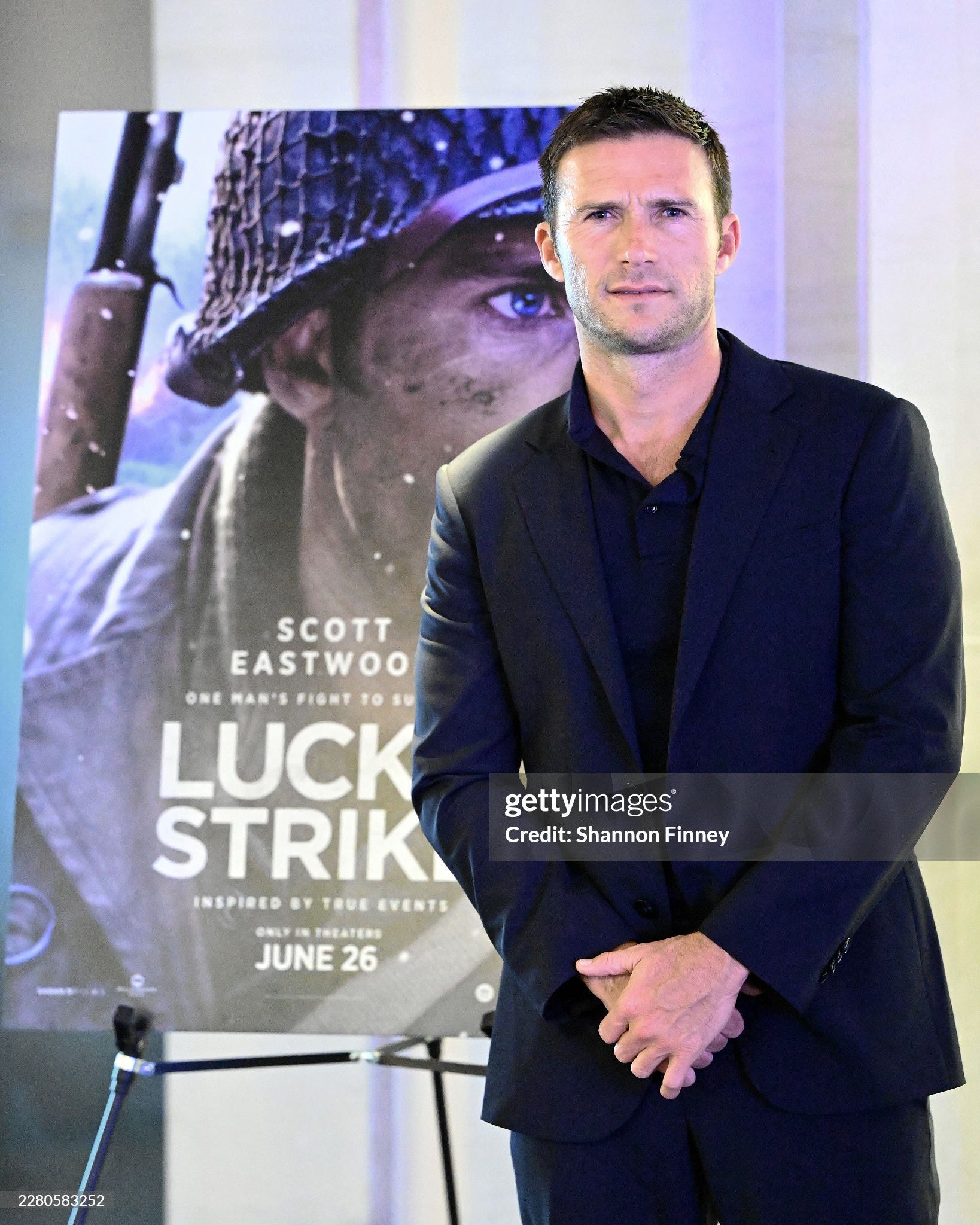
Scott Eastwood’s remarks and Q&A insights from the screening centered heavily on the film’s historical accuracy and his interactions with a real-life WWII hero.
The key highlight from his appearances and discussion around the event was honoring Colonel Herbert Stern: the oldest living graduate of West Point. Eastwood mentioned that having Stern hold his hand and state that the film “got this one right” was the most powerful and meaningful moment for him.
Eastwood noted that despite doing research on military history for over two decades, he was surprised to learn about the extent of German espionage during The Battle of the Bulge—specifically, Nazi soldiers posing as Americans.
When discussing the grueling physical challenges of filming in the freezing Bulgarian winter, he reminded audiences that those difficulties pale in comparison to what real WWII soldiers endured. He expressed deep reverence for the veterans he met through the project.