
Howard R. Carr
Still at Work in Georgetown
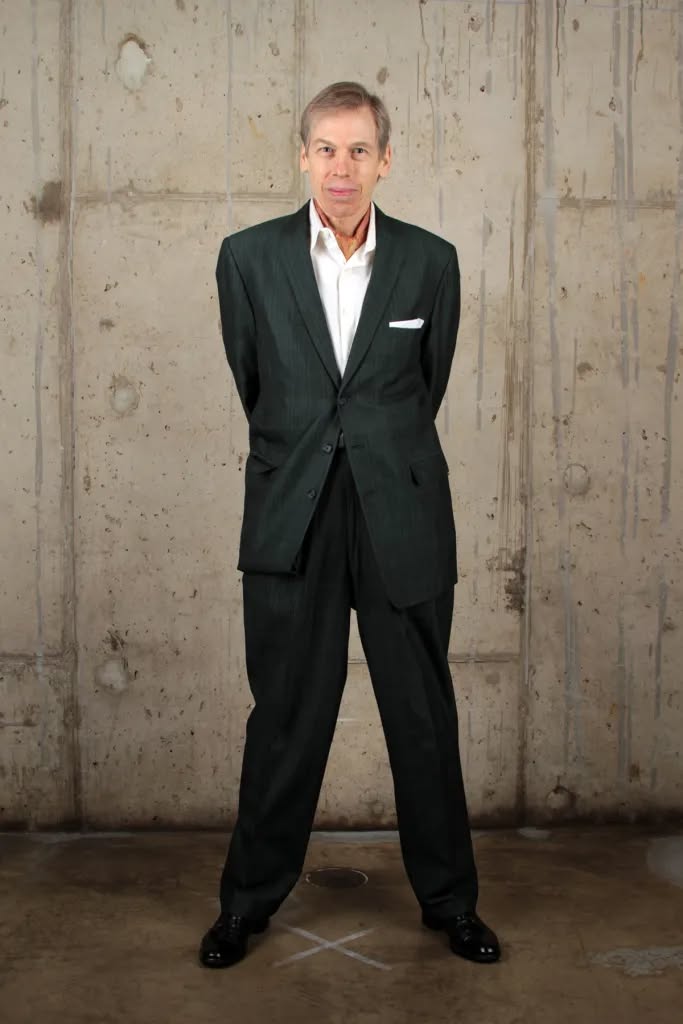
Written by Ce Jamieson
A Washington artist whose record reaches from the early Govinda Gallery years to a present-day studio at Jackson Art Center continues making new work more than five decades on.
At 3050 R Street NW in Georgetown, in the historic Jackson School building across from Montrose Park, Howard R. Carr continues to make art. That simple fact may be the best place to begin his story.
Howard's documented artistic record reaches back more than five decades. It includes the early years of Govinda Gallery, independent reviews in The Washington Post, years of continuing studio practice in Washington, and a remarkable 1971-72 chapter in Cadaqués and Port Lligat preserved in Chris Murray's published firsthand recollections. Yet the most compelling part of the story is not that Howard once moved through extraordinary artistic circles. It is that he kept working.
Govinda Gallery opened in Georgetown in the fall of 1975 under the direction of Chris Murray. Looking back on the gallery's origins in 2025, Murray named Michael Netter, Kim Waters and Howard Carr as the artists who inspired him to open a gallery. Howard subsequently became a recurring Govinda artist. The gallery's own exhibition archive records named Howard Carr exhibitions on October 27, 1978, September 28, 1984 and April 16, 1998.

The surviving newspaper record gives those dates additional weight. In October 1984, Washington Post critic Paul Richard reviewed Howard's Govinda exhibition of oils. Richard identified Carr as a Washington painter, discussed the pleasure-filled subjects in the work and observed artistic affinities with Braque and Matisse. It is especially valuable today because it is a contemporaneous record of an independent critic engaging Howard's work on its own terms.
Fourteen years later, The Washington Post returned to Howard's work. Ferdinand Protzman reviewed his 1998 Govinda exhibition, describing paintings, sculpture and assemblage and singling out works including Perspectival Study of a Chalice and Bowl With Stand. Govinda's archive identifies that exhibition as Howard Carr, Recent Work, opening April 16, 1998.
There is also an earlier chapter, far from Georgetown, that Howard's longtime friend Chris Murray has documented in detail.
According to Murray's firsthand account, Howard met Salvador Dalí in Cadaqués, Spain, in 1971. The following year Howard returned to Europe with Murray and artist Kim Waters. The three traveled through Europe and Morocco in a Volkswagen Beetle and rented an apartment in Cadaqués for two months. Murray recalls that for roughly six weeks they spent their evenings at Dalí's home in nearby Port Lligat, playing music while Dalí entertained invited guests near his swimming pool. Howard played Moroccan hand drum, Waters played bells and Murray played dulcimer. Murray published the central part of this recollection as early as 2011 and described it again in greater detail in 2025.
It is an irresistible story, but it should be kept in proportion. Murray's accounts do not describe Howard as Dalí's student or collaborator, and that is not how Howard is being presented here. The value of the episode is more human than promotional: a young American artist briefly entered one of the twentieth century's most unusual creative environments, carried the experience with him, and then returned to the long work of building his own artistic life.
That life remained rooted in Washington. The Georgetowner photographed Howard with his portrait of John Dreyfuss at Jackson Art Center's 2016 open house. In 2018, the newspaper again documented him at Jackson, this time working on a portrait during the open-studio event. In 2022, The Georgetowner featured Howard's contribution to its Mapping Georgetown project and explicitly invited readers to see his work at Jackson's open studio. Jackson Art Center continues to list Howard Carr among its artists today.

There is something fitting about that location. Jackson Art Center works from the former classrooms of the historic Jackson School, converted to artist space decades ago. The building sits beside the same Georgetown landscape that connects several chapters of Howard's story. Murray recalls first meeting Kim Waters at Montrose Park in the late 1960s. Waters later introduced him to Howard. Decades later, Howard's own studio practice continues across from that park.
When an artist has worked for more than half a century, the record rarely survives in one tidy place. It becomes dispersed among paintings, exhibition announcements, newspaper archives, photographs, websites, studio walls and the memories of people who were present. Part of what I have been doing with Howard is bringing those pieces back into conversation with one another.
What emerges is something quiet but persuasive: evidence of continuity. A 2000 Washington Post history of Govinda identified Howard Carr among the local painters in the gallery's early shows. His work later received independent critical attention in the same newspaper. And decades after those exhibitions closed, he continues to make art in Georgetown.
Art history often encourages us to look backward, toward finished careers and closed chapters. Howard Carr offers another possibility. A piece of Georgetown's artistic history is not finished. It is still working in a studio on R Street, still making new objects, still revisiting old memories and still adding to the record.
More than five decades on, Howard R. Carr is still at work in Georgetown. The story is not only about where he has been. It is about the fact that he is still making the next thing.