
Dancing Past the Darkness
The latest from Hollywood on the Potomac.
Written by Tamara Buchwald
Photos by Ben Droz
How the TIME/Mecuria After-Party Reclaimed the Night. It could have unraveled.
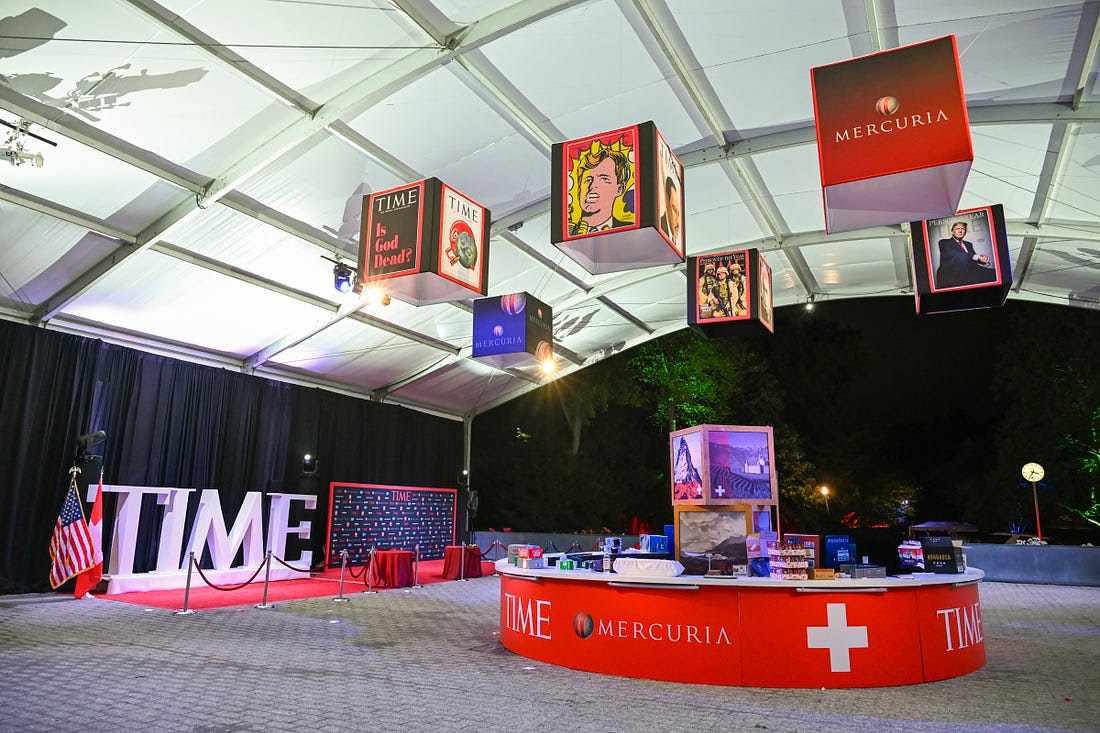
Just hours after a shocking shooting cast a shadow over the White House Correspondents’ Dinner, the city stood at a fragile crossroads between fear and defiance. Motorcades roared through tense streets, conversations lingered on what might have been, and a few miles away His Excellency Dr. Ralf Heckner & Dr. Ilaria Macconi Heckner opened the doors at the Swiss Residence to something altogether different: a refusal to let darkness have the final word. The TIME/ Mecuria after-party did not ignore what had happened but instead it absorbed it and carried it quietly in the background deliberately and then chose joy.
The arrival set the tone. A long red carpet stretched toward the entrance, guiding guests into a space transformed by light. Inside, the residence glowed in layered hues of red and blue that blended seamlessly into a rich purple wash, casting an atmosphere that felt both dramatic and intimate. It was a striking visual that signaled this would not be an ordinary evening, even under extraordinary circumstances.

Moving through the residence, you could feel the energy build as the rooms were humming with conversation, laughter surfacing in waves and the music threading it all together. Stepping out onto the balcony, the scene opened up and in the distance, the Washington Monument stood tall against the night sky, a steady, familiar presence beyond the flicker of lightning and the glow of the city. It was a moment of pause, where the scale of Washington its symbolism and its continuity felt especially vivid.

The crowd was massive, shoulder to shoulder, a cross-section of media, politics, culture, and creativity. Energy moved through the room in waves. There was a kind of social alchemy at work. You could feel it in the way people leaned in, closing the distance to be heard over the music not out of necessity alone, but out of genuine engagement. It wasn’t forced or performative, it felt earned, even a little surprising, given the weight of the events earlier in the evening.

And then the music took over.
The dance floor became the emotional center of the night. People danced not just to celebrate, but to shake off the weight of the evening and to remind themselves, and each other, that they were still here. The DJ read the room perfectly, building from smooth, low-tempo tracks into full, euphoric crescendos. At one point, the entire floor seemed to move in unison, a rare and fleeting kind of synchronicity that felt almost symbolic resulting in hundreds of people choosing, together, not to retreat.

Samantha Sault and Matt Lauer
By two am, the earlier fear hadn’t vanished, it had been transformed. Refracted. The party didn’t erase the darkness; it danced past it and that, perhaps, was the quiet triumph of the night. In a city so often defined by power and proximity to crisis, the TIME/Mecuria after-party at the Swiss residence became something else entirely: a space where resilience looked like movement, where joy felt intentional, and where a crowd chose, collectively, to reclaim not just the evening, but the feeling of possibility that comes with it.