
Behind the Secret Doors
The latest from Hollywood on the Potomac.
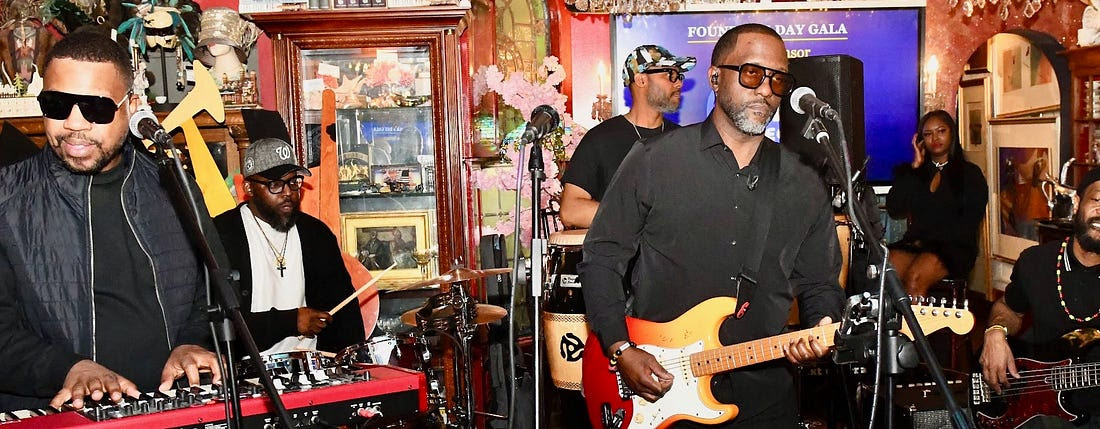
Photo credit: Roberts Photography
One birthday, one anniversary, more than 100 rooms and 80 secret doors—leave it to H.H. Leonards to throw a party where even finding your way to the festivities is part of the adventure. On November 10, the O Museum in the Mansion celebrated its 47th anniversary and the 76th birthday of its irrepressible founder, affectionately known as “H.” Co-hosted by museum chairman Paul J. Cohn, the Founder’s Day Gala brought together Washington’s social, business, and cultural circles for an evening of music by Sirius Company, savory bites, decadent desserts, dancing, auction and fundraising. But beyond the festivities, the occasion was a celebration of a woman whose extraordinary imagination, unconventional approach to life, and generosity of spirit have transformed a Washington address into an institution unlike any other.

If the walls of the O Mansion could talk, they would have enough material for a television series—and probably a few scandals along the way.
Among the mansion’s most extraordinary residents was civil rights icon Rosa Parks, who found refuge there after being assaulted in her Detroit home. Leonards offered her a place to stay through the mansion’s Artist and Heroes Residency Program, asking for nothing in return. What makes their relationship particularly touching is that Leonards initially had little understanding of Parks’ place in American history. She simply saw a woman who needed help. “I just love her. She’s like my mother,” Leonards recalled telling a visitor who asked whether she knew who Parks was.
Parks was also responsible for giving Leonards a rather distinguished nickname. A woman of impeccable manners, Parks insisted on addressing people formally. When Leonards suggested she simply call her H, Parks objected. “No, dear, that’s not proper,” she replied. For six months, Parks avoided addressing her by name. Eventually, she settled on “Lady H,” a title that would become part of Leonards’ identity.

But the mansion’s magic extends far beyond its famous residents. Sometimes the most extraordinary moments happened without anyone planning them.
Take Christmas Eve, when Cordell, a homeless veteran who had been given a room at the mansion, was playing “O Holy Night” on the piano. A visitor wandered over and began singing with him. That visitor was Luciano Pavarotti. “He was just like another guy, big guy in the house,” Leonards recalled. “Then when he opened up his voice, of course I knew who he was.” Imagine the scene: one of the world’s greatest tenors singing alongside a formerly homeless veteran in a Washington mansion filled with secret doors. No concert tickets, no publicity campaign, no velvet ropes. Just an extraordinary moment that could only have happened at the O Mansion.
The piano itself had an equally fascinating history. Sculptor Frederick Hart, whose work includes the Three Soldiers sculpture at the Vietnam Veterans Memorial, eventually acquired the instrument for his conservatory, exchanging artwork for it.
Such encounters are part of the mansion’s peculiar charm, where the famous and the forgotten occupy the same rooms, and celebrity is rarely the most interesting thing about a person.

In fact, when asked which of the countless celebrated visitors intrigued her most, Leonards offered a surprising answer. “Believe it or not, the people that most interest me are scientists because they see a bigger picture of the world.”
Perhaps that explains the mansion’s continuing evolution. Alongside its historic memorabilia and secret passageways are imaginative augmented-reality experiences. In one room, visitors can find themselves on an African safari; in another, they can encounter Elvis Presley.
And for America’s 250th anniversary, Leonards has embarked on yet another ambitious undertaking: decorating 250 trees throughout the property, with volunteers arriving from across the country to help. Even after nearly five decades, apparently, there is no such thing as too much imagination.
But beneath all the whimsy lies a philosophy that has guided Leonards since childhood. When adults asked what she wanted to become when she grew up, her answer was hardly conventional. “I want to be a grand old lady.” It was a declaration that would eventually take on special meaning, particularly after Rosa Parks began calling her Lady H.
Leonards also remembers telling people, “I’m going to make you famous.”
Not because she wanted the spotlight for herself, but because she believed in helping others discover their own possibilities.
“So I view myself as a picture frame, and I’m on the outside, and then I build the painting inside for other people.”

Today, at 76, Leonards is thinking about the future of the extraordinary institution she created. “Now that I’m 76, this place needs to be sustainable. People need to know what we’ve done,” she said.
Her son, Z Stein, who grew up among the mansion’s artists, musicians, and unexpected visitors, now serves as its CEO, helping preserve the legacy while imagining what comes next. “We’ve come a long way. I believe the best chapters in this place are still ahead of us,” Stein told guests at the anniversary celebration.
And perhaps that is the real secret of the O Mansion.
Behind the hidden passageways, priceless memorabilia, eccentric collections, and theatrical surprises is something far more enduring than a museum. It is a place built on the belief that a single act of kindness can change someone’s life, that imagination should never have an expiration date, and that the most interesting people aren’t necessarily the most famous.
Washington may be a city obsessed with power, prestige, and knowing who’s behind every door. But H.H. Leonards has spent nearly five decades demonstrating that what matters most isn’t who can open a door for you. It’s whose door you choose to open for someone else.
And in the end, that may be her greatest achievement: a lifetime devoted, as she puts it, “to change one heart at a time.”